Last week, my Digital Media Literacy class dove into U.S. politics–taking a closer look at how the media and other factors sway presidential elections. As part of my homework, I explored the Newseum EDCollection Decoding Elections: Process, Persuasion & Participation. I took the Political Personality quiz, read about the presidential election process, and viewed artifacts and media clips that capture key election campaign moments in the nation’s history.
What I learned from this activity:
- The election process is open to outside influence
- National Party Conventions have evolved from private to public events
- Candidates use mass media to stand out
- The power of persuasive slogans
The election process is open to outside influence
The entire EdCollection was a reminder about how impressionable the U.S. political system is. Anyone can get involved, regardless of their intent. People have power as individuals, as politicians, content creators, or as members of independent political action committees to persuade the public about how the American government should be run. The system is open to change, and we have the power to change it.
“After pressure in the late 1820s to give a voice to the common man, party members added meetings at local, state, and national levels to arrive at a nominee.”
NewseumED
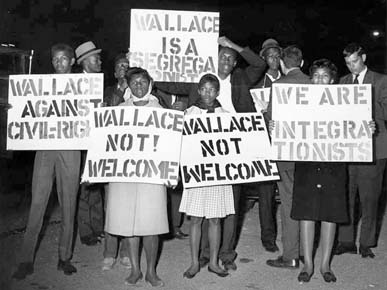
The article, “The Power of the Crowd” states, “During the 1968 election, civil rights activists targeted third-party candidate George Wallace, an outspoken segregationist…News coverage of the confrontations hurt Wallace’s campaign and fed the public perception that he was ‘dangerous'” (par. 3).
National Party Conventions have evolved from private to public events
It was interesting to learn how national party conventions have evolved over the years. I have always known conventions to be these large, action-packed celebrations broadcast throughout the country. Finding out that national conventions were not originally fiery and flashy mass-attended events was surprising.
National conventions used to be exclusive events for political elites to meet and discuss nominees. Today, politicians use national conventions as a platform for engaging undecided voters and reinvigorating supporters. With energized crowds, celebrity performances, flashy special effects, and a sense of comradery, modern national conventions play out like major award shows or sporting events.
Candidates use mass media to stand out
I learned more about how politicians utilize the media to control their image. From photo-ops, to television appearances, to social media posts, presidential candidates try to connect with voters by shaping their image. For example, when Richard Nixon ran in 1968, he spoke in structured television specials that were designed to present him in a positive light. By selecting audience members and panelists beforehand, Nixon was prepared to perform as a confident and charismatic figure. When Bill Clinton played the saxophone on The Arsenio Hall Show, he resonated with black people and young people in a cool, authentic way.
Barack Obama made use of social media while campaigning in 2008. Even though social media was just coming on the scene, he saw its potential. His 2008 campaign included Facebook promotions and text message campaign updates. Overall, it was interesting to see how candidates propelled their campaigns by taking control of their portrayals in mass media.
The power of persuasive slogans
While reading, it was interesting to examine how candidates used rhetoric to make connections to national heroes and/or set themselves apart from other contenders.
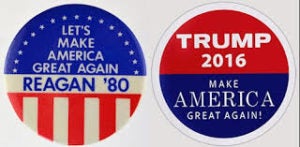
For example, in the 2016 election, Donald Trump’s “Make America Great Again” slogan was based on Ronald Reagan’s 1980 campaign slogan “Let’s Make America Great Again.” Trump was trying to portray an image that he would be the next Reagan: rich, famous, but ready to work on behalf of the common man.
To this day, when I hear the words “Yes We Can” and “Hope” I think of Barack Obama’s presidential campaigns. His slogans channel Abraham Lincoln, John F. Kennedy, and Civil Rights activists’ calls for a united front for positive change. Seeing President Obama’s campaign built on hope and change felt like this was the time we were waiting for.
In all, I learned more about the influential factors that sway presidential elections. I enjoyed watching videos and observing artifacts from various campaigns. With 2020 presidential campaigns well underway, I look forward to seeing how these and other persuasive factors come into play.
 Explorations| Go further