It’s hard to believe, but my Digital Media Literacy class met for the last time this week (virtually, of course due to the coronavirus). One of the few tasks left for the class is completing my final blog and vlog entry on what I’ve learned from this course.

Gif courtesy of giphy.com.
Usually, after finishing a class, I am left with my papers, test scores, notes, and PowerPoint presentations. All the projects I complete get stored in my virtual drive for the rest of eternity. I rarely ever look at them again, let alone have an opportunity to submit them as work samples.
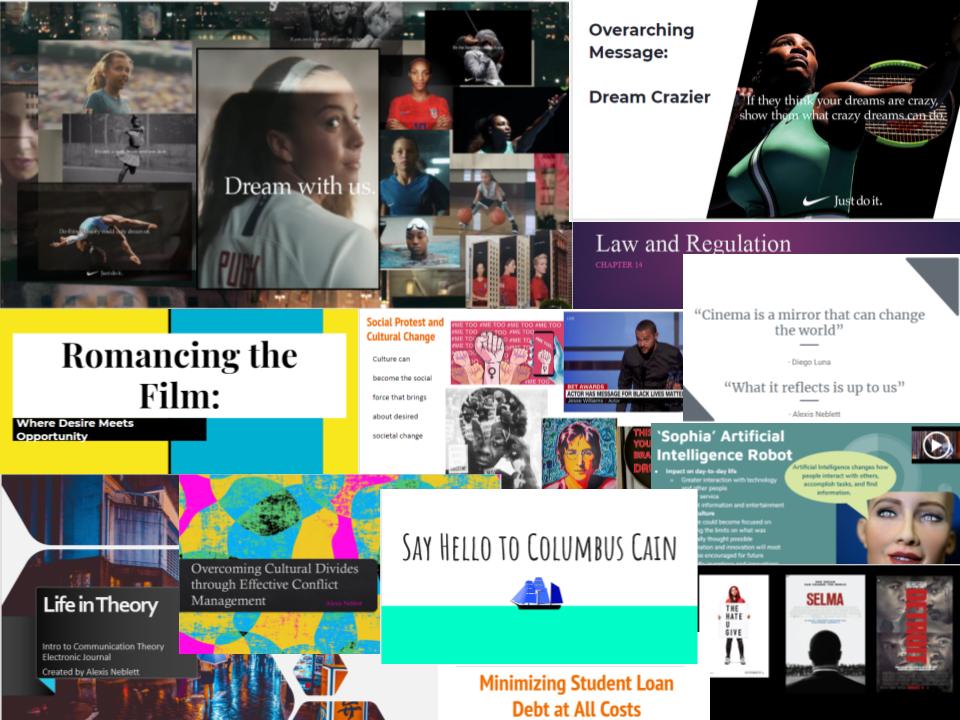
Most semesters, I find myself trying to fit in time to learn applicable skills and build my work portfolio while completing long lists of assignments. This semester, however, my experience has been starkly different. I greatly appreciate Dr. Patton’s approach to teaching Digital Media Literacy because it has provided me with a variety of hands-on learning opportunities and the chance to create work samples. My growth from taking this Digital Media literacy class has been in polishing my content creation skills and sharpening my lens for analyzing media.
Content Creation
Dr. Patton’s emphasis on hands-on learning provided a great opportunity to practice a variety of digital media skills. In this class, I participated in skill-building workshops including designing WordPress websites, Animoto video slideshows, and interactive timelines. I am finishing this class with real world knowledge and skills.
Submitting blog and vlog entries on a weekly schedule was great practice for meeting deadlines on written pieces and video projects. At first, sitting down to write a 500-750 word blog and planning a two to three-minute vlog was a large task. I remember filming my first vlog on Super Bowl Sunday. I started filming about an hour before the game started, but it took several tries to get everything right (lines, lighting, audio, etc.). By the time I finished filming, the game was long over. Practice makes perfect as they say. My vlog on the “Internet Cell Phones” documentary took me about three hours to plan, produce, and edit. A world of difference!
Another great skill I learned was live-tweeting. Every lecture, I was required to post ten tweets about what was happening in class using the hashtag #HUMediaLit. These tweets couldn’t be zero effort. Dr. Patton said at the beginning of the semester that she wanted us to post substantive tweets such as reflections, questions, quotes, information we learned, and pictures of lecture slides.
This is a highly useful skill because social media management and reporting positions often require live-tweeting during events. Not only have I practiced this multitasking skill, but I started using Twitter. My content is engaging, informative, and entertaining. I look forward to connecting with other Communications students and professionals on this platform.
My favorite new skill is creating my own gifs. I’ve always wanted to learn how gifs were made. They seemed magical and mysterious like the moving pictures in the Harry Potter series.
Learning how to create gifs opened a world of creative opportunity! Instead of looking for the perfect gif to express what I’m saying, I can create my own.
In the future, when I apply for college media management positions, internships, and jobs, I will have these content creation skills on my resume and examples to showcase in my portfolio.
Analytical Lens
Establishing a solid analytical framework is essential when consuming and creating content. Throughout this semester, Dr. Patton encouraged my class to analyze media content from our sociohistorical and sociocultural perspectives. For example, we discussed the larger implications of selfie filters that give users European features to appear “more attractive.” We watched documentaries about the disturbing reality of the black community’s fight for justice against police brutality and the larger implications of technological surveillance, videos highlighting the core elements of digital media literacy, and an episode of Black Mirror to practice writing film critiques. Other class lectures covered
- The fundamentals of journalism
- The history of the internet and selfies
- First Amendment rights and hate speech
- How to identify fake news
- The history of advertising, its racist and sexually exploitative roots in the United States
I appreciate Dr. Patton’s emphasis on media analysis. My reflective and questioning attitude towards media content came in handy as class activities required a deeper level of engagement with media messages. One of my key takeaways from this class was the importance of black content creators. Representation is needed in all areas of the communications field. I look forward to bringing my voice, understanding, perspective, and experiences to the field.

